
Eggs and avocados are two of the most nutrient-dense foods you can eat, and they happen to be even better together. In this article, I’ll break down the science behind why they work well in tandem, explain why the cholesterol myth has finally been put to rest, and share what I’ve learned from raising our own pastured hens and eating these two foods almost every single day.
Key Takeaways
Why I Eat Eggs and Avocados Together
Most mornings, my breakfast looks the same: four or five eggs from our own pastured hens, half an avocado, seasonal fruits, and a cup of mold-free coffee. It’s simple, it’s satisfying, and it covers an incredible amount of nutritional ground in a single meal.
Here’s the thing: these two foods are impressive individually, but they pack an even bigger health punch when consumed at the same time.
That’s because avocados are loaded with monounsaturated fat, which helps your body absorb the fat-soluble vitamins (A, D, E and K) that egg yolks are rich in. In fact, a 2005 study published in the Journal of Nutrition found that adding avocado to a meal increased carotenoid absorption by up to 15 times. That means the nutrients in your eggs become significantly more bioavailable when you eat them alongside avocado.
From an evolutionary perspective, this kind of pairing makes perfect sense. Humans evolved eating whole, nutrient-dense animal foods alongside whatever fruits and plants were available. Eggs have been a part of the human diet for millennia, and avocados — one of the least-toxic fruits available — are an excellent source of fat that our ancestors in tropical and subtropical regions would have had regular access to.
The bottom line is: if you’re looking for a simple, nutrient-dense meal that aligns with a species-appropriate diet, eggs and avocados are hard to beat.
Nutrition At a Glance: Eggs + Avocado
USDA FoodData Central| 1 Large Egg | ½ Avocado (75g) | |
|---|---|---|
| Protein | 6.3 g 13% DV | 1.5 g 3% DV |
| Healthy Fat | 5.0 g sat + MUFA | 11.0 g mostly MUFA |
| Choline | 147 mg 27% DV | 10.5 mg 2% DV |
| Potassium | 69 mg 1% DV | 364 mg 8% DV |
| Vitamin A | 80 mcg 9% DV · retinol | 5 mcg 1% DV |
| Folate | 24 mcg 6% DV | 61 mcg 15% DV |
| Selenium | 15.4 mcg 28% DV | 0.3 mcg <1% DV |
Eggs Are A Nutritional Powerhouse
I firmly believe that eggs are one of the most nutrient-dense foods on the planet. A single large egg provides 6 grams of protein, all nine essential amino acids, and a dense concentration of vitamins and minerals.
Here’s what a single large egg delivers:
Egg Nutrition Profile
Per 1 large egg (50g), whole, cooked| Nutrient | Amount | % Daily Value |
|---|---|---|
| Protein | 6.3 g | 13% |
| Choline | 147 mg | 27% |
| Selenium | 15.4 mcg | 28% |
| Vitamin B12 | 0.45 mcg | 19% |
| Riboflavin (B2) | 0.23 mg | 18% |
| Vitamin A (retinol) | 80 mcg RAE | 9% |
| Phosphorus | 99 mg | 8% |
| Vitamin D | 1.0 mcg | 5% |
| Total Fat | 5.0 g | 6% |
| Calories | 72 | — |
One thing I want to highlight: eggs deliver retinol — the pre-formed, bioavailable version of Vitamin A. That’s a critical distinction. Plant sources provide beta-carotene, which your body has to convert into retinol, and the conversion rate is notoriously poor (as low as 3-6% in some individuals).
With eggs, you skip that bottleneck entirely. This is one of the reasons I emphasize the importance of choosing animal sources of nutrients over plant-based alternatives.
Choline: The Nutrient Almost Nobody Gets Enough Of
If there’s one nutrient that makes eggs irreplaceable in most diets, it’s choline.
Choline is essential for brain function, liver health, cell membrane integrity, and nervous system signaling. It’s especially critical during pregnancy for fetal brain development.
And almost nobody is getting enough of it..=
A 2017 NHANES analysis by Wallace and Fulgoni found that only 8% of American adults have adequate intake of choline. Among people who regularly eat eggs, that number jumps to 57%.
The researchers concluded that achieving adequate choline intake is “extremely difficult” without eggs or supplementation.
That alone should settle the debate about whether eggs belong in your diet. But there’s more.
A 2024 study from the Rush Memory and Aging Project found that older adults who ate two or more eggs per week had a 47% lower risk of Alzheimer’s dementia compared to those who ate fewer. Brain autopsies confirmed lower Alzheimer’s pathology, and the association was partially mediated through dietary choline.
Let me be clear: choline is an essential nutrient, and eggs are by far the most practical way to get it.
One large egg provides about 147 mg — roughly 27% of the daily adequate intake. Three to five eggs at breakfast, which is what I eat every morning, gets you well into the optimal range.
Debunking The Eggs & Cholesterol Myth
Eggs used to get a bad rap because of their cholesterol content. For decades, the assumption was that dietary cholesterol raised blood cholesterol, which raised LDL, which caused heart disease. That chain of logic was wrong at nearly every link.
First of all, cholesterol and LDL are not the same thing. Cholesterol is a lipid — a structural component of every cell and the precursor for hormones like testosterone, estrogen and cortisol. Your liver produces 800 to 1,000 mg of it daily because you can’t survive without it. In contrast, LDL is a transport particle — a protein-shelled sphere that carries cholesterol through your bloodstream. Both have been unfairly demonized.
Two gold-standard RCTs — the Sydney Diet Heart Study and the Minnesota Coronary Experiment — both successfully lowered cholesterol by replacing saturated fat with seed oils, and both saw worse outcomes, including higher mortality. An analysis of 136,905 coronary hospitalizations (Sachdeva et al., 2009) found nearly half of heart attack patients had LDL below the “optimal” target. And the CANTOS trial (Ridker et al., NEJM 2017) reduced cardiovascular events by 15% with an anti-inflammatory drug — without lowering LDL at all.
In other words, it’s inflammation, not lipid levels, that drives atherosclerotic events.
As for eggs specifically: the PURE study (Dehghan et al., 2020) tracked 177,000 people across 50 countries and found no association between egg intake and cardiovascular disease or mortality. The U.S. Dietary Guidelines Advisory Committee removed the cholesterol limit in 2015, acknowledging that dietary cholesterol is “not a nutrient of concern.”
I can confirm this from my own experience. I eat four to five eggs daily, and my total cholesterol is 244, my LDL is 180, my CRP is under 0.3, and my coronary calcium score is zero.
By conventional standards my numbers are “high.” But my inflammatory markers are rock-bottom and my arteries are clean. That’s exactly the pattern the research predicts.
For a deep dive into why LDL alone is an unreliable marker — including the suppressed trial data, LDL particle size, and why the lipid hypothesis is fundamentally flawed — check out my article on saturated fat and cholesterol.
Not All Eggs Are Created Equal
I’ve been saying this for years, and the science backs it up: the quality of the egg depends entirely on the quality of life the hen lived. A chicken locked in a cage eating corn and soy produces a fundamentally different egg than a hen foraging on pasture.
A landmark 2010 study from Penn State University (Karsten et al.) compared eggs from pastured hens to eggs from hens on a standard commercial diet. The differences were striking: pastured eggs had twice the Vitamin E, 2.5 times the total omega-3 fatty acids, 38% more Vitamin A, and less than half the omega-6 to omega-3 ratio of conventional eggs.
A 2022 study published in Animals (Van Vliet et al.) took this even further. Researchers found that pasture-raised hens fed a corn-and-soy-free diet supplemented with grass-fed beef suet and liver produced eggs with dramatically improved fatty acid profiles — including five times more CLA and substantially lower omega-6 to omega-3 ratios.
This is exactly why my wife Kathy and I raise our own flock of heritage-breed chickens on our 40-acre homestead in rural Georgia. We rotate them across pasture, they forage on bugs and grass, and they produce eggs with deep orange yolks that are visibly different from anything you’ll find at the grocery store.
Our family goes through up to four dozen of these eggs per week, and I wouldn’t have it any other way.
To learn more about why sourcing matters, check out my article on the health differences between free-range and pastured eggs.
Why Avocados Are My Favorite Fruit
What makes avocados unique is their fat profile. Unlike most fruits, which are primarily carbohydrate (fructose), avocados are rich in monounsaturated fat — specifically oleic acid, the same heart-healthy fat found in olive oil.
A single avocado (about 150 grams) contains roughly 22 grams of fat, mostly monounsaturated, with very little sugar. That makes them an ideal fit for an animal-based dietary framework like the one I follow, where I try to keep fructose intake relatively low.
But the nutrient I most want to highlight here is potassium.
Most people think of bananas when they think of potassium, but avocados actually blow bananas out of the water. According to USDA data, avocados contain approximately 485 mg of potassium per 100 grams compared to bananas’ 358 mg (or about 35% more).
Potassium is critical for blood pressure regulation, muscle function and nerve signaling, and most Americans don’t get nearly enough of it (source).
Here’s the nutritional profile of half an avocado (about 75 grams):
Avocado Nutrition Profile
Per ½ avocado (~75g), raw| Nutrient | Amount | % Daily Value |
|---|---|---|
| Total Fat | 11.0 g | 14% |
| Monounsaturated Fat | 7.4 g | — |
| Potassium | 364 mg | 8% |
| Pantothenic Acid (B5) | 1.05 mg | 21% |
| Folate | 60.8 mcg | 15% |
| Vitamin K | 15.7 mcg | 13% |
| Vitamin E | 1.6 mg | 10% |
| Vitamin C | 7.5 mg | 8% |
| Net Carbs | 1.4 g | — |
| Calories | 120 | — |
Avocados beat bananas on potassium: 485 mg vs. 358 mg per 100g — that’s ~35% more, gram for gram (USDA)
A 2022 prospective cohort study from Harvard, which followed more than 110,000 participants for 30 years, found that eating two or more servings of avocado per week was associated with a 16% lower risk of cardiovascular disease and a 21% lower risk of coronary heart disease, compared to those who rarely ate avocados (source).
I also appreciate that avocados are among the least-toxic plant foods available.
In my article on plants vs. meat, I explain why I’ve moved away from most vegetables — the antinutrients (oxalates, lectins, phytates) in leafy greens and other plant foods can cause real problems.
Avocados, as a non-sweet fruit, contain minimal plant defense chemicals, which puts them firmly in the “safe” category on my spectrum.
How I Prepare Eggs and Avocados
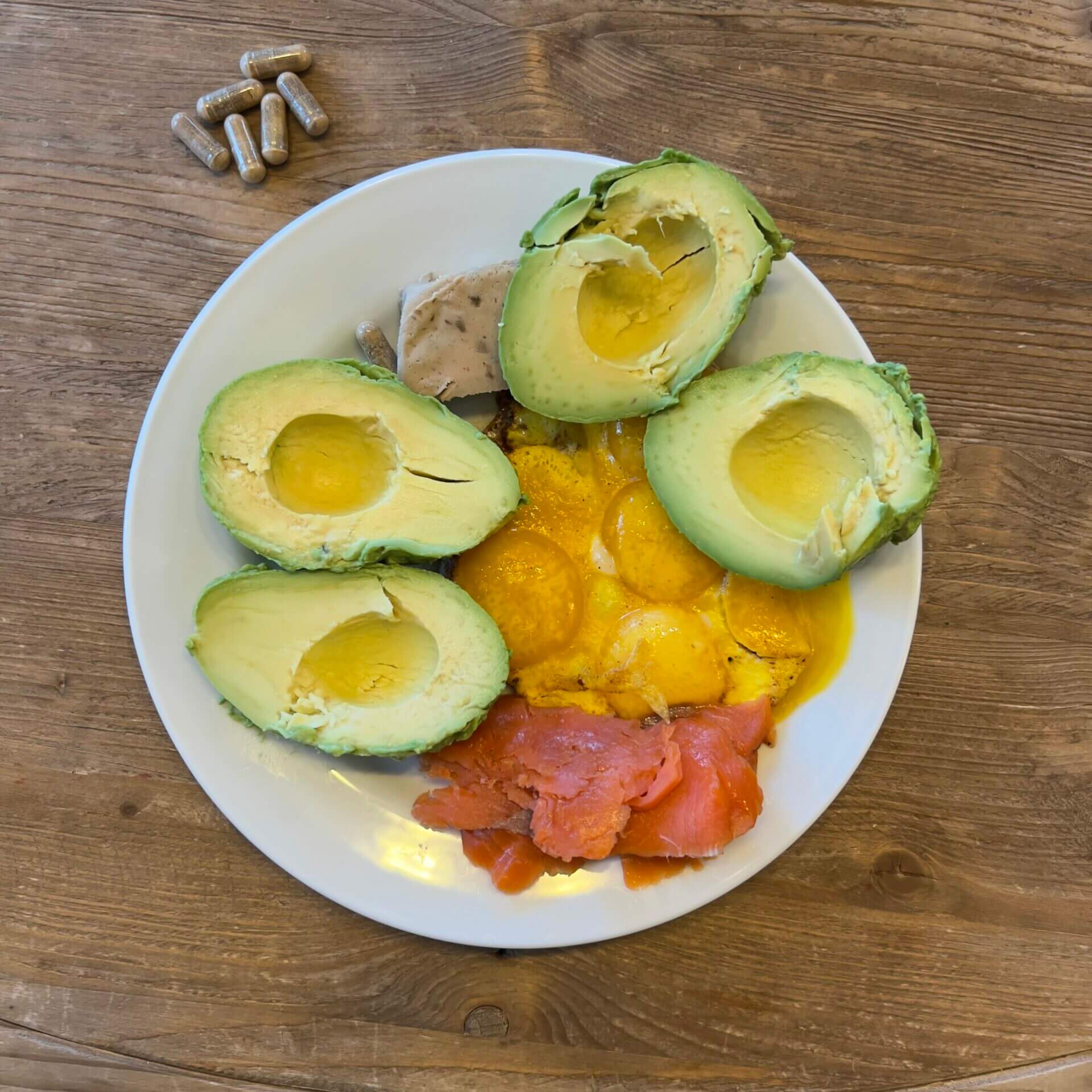
Preparing both of these foods is simple, which is part of why they’re such a staple in our house.
I usually cook my eggs sunny-side up in grass-fed butter or tallow — never in seed oils. Kathy sometimes makes a big egg casserole that feeds the whole family for several days. The kids eat eggs daily too, and our daughter, Isabella has been eating them since she was old enough for solid food.
For avocados, I usually just slice one in half, remove the pit, and eat it alongside my eggs with a sprinkle of Redmond Real Salt.
I also make a simple guacamole with two avocados, lime juice, salt, and pepper — it’s nothing fancy, but it’s delicious.
When picking avocados, buy them slightly firm and let them ripen at home for a day or two. We usually get ours from Costco or Whole Foods and go through several per week.
Where to Buy High-Quality Eggs and Avocados
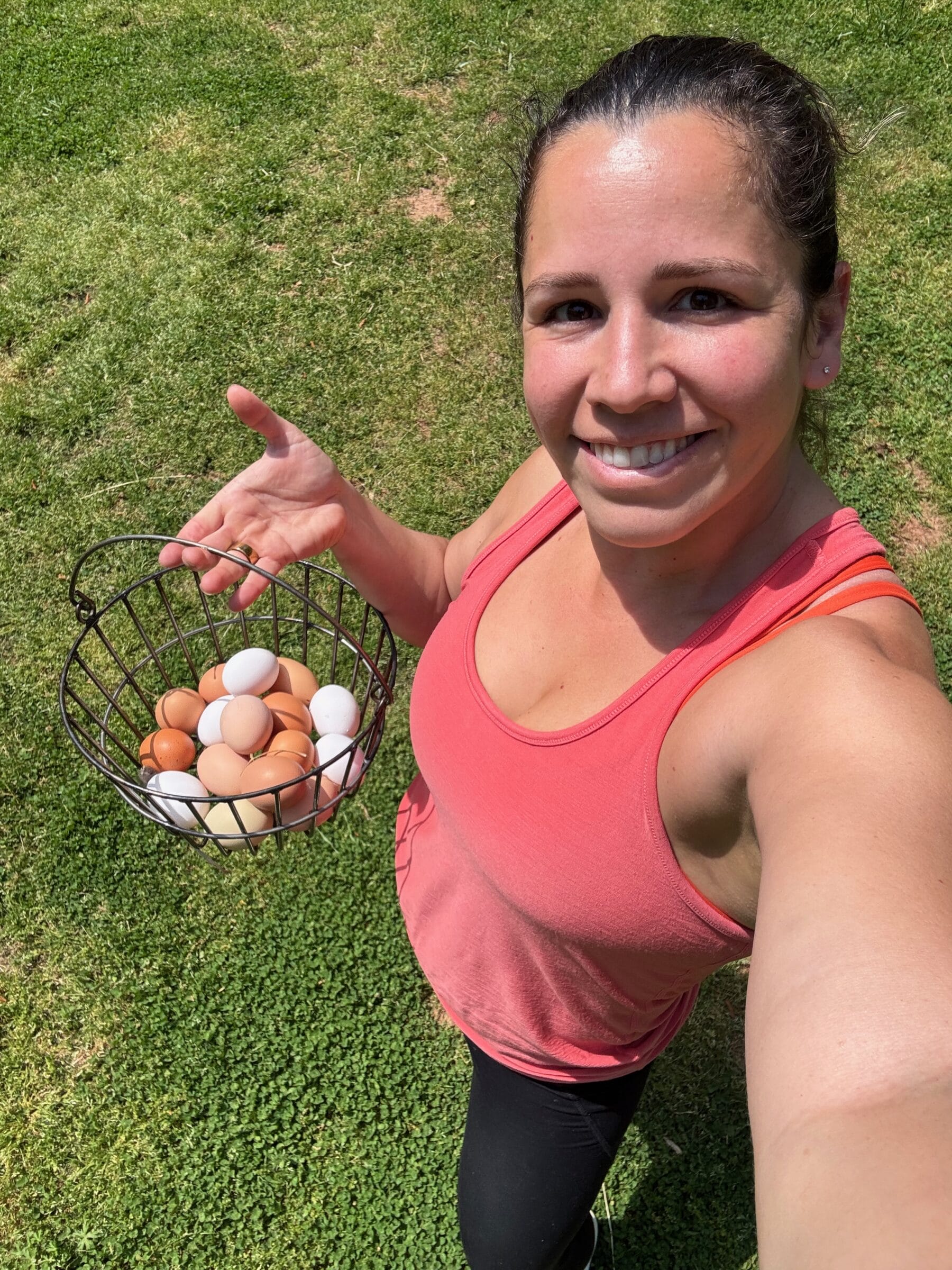
The best eggs come from pasture-raised hens, ideally from a local farm or your own backyard flock.
If you’re not ready to raise chickens (yet), look for eggs labeled “pasture-raised” from brands like Vital Farms, which are available at most Whole Foods and on Amazon.
Avoid eggs labeled only “cage-free” or “free-range” — those terms are nearly meaningless in practice. For the full breakdown of why labeling matters, see my pastured eggs article.
Organic avocados are widely available at any major grocery store. We buy them at Costco and Whole Foods. I never had avocado until I moved to the United States, but it quickly became one of my favorite foods — and now I can’t imagine my diet without it.
Frequently Asked Questions
Absolutely. I’ve been eating both daily for years, and my health markers — including cholesterol, inflammation (CRP), and cardiovascular health (coronary calcium score of zero) — reflect that this combination works.
The PURE study, which tracked roughly 177,000 people across 50 countries, found no association between egg intake and cardiovascular disease or mortality — even at seven or more eggs per week. And the Harvard avocado study found consistent cardiovascular benefits with regular consumption.
In other words, if you’re metabolically healthy, there’s no credible, evidence-based reason to limit your intake of either of these foods.
Yes. But the better question is whether “cholesterol” is even the right thing to worry about. As I explained in this article, cholesterol and LDL are different things, and neither is a reliable standalone predictor of heart disease.
What matters is inflammation and metabolic context.
Dietary cholesterol from eggs barely moves blood cholesterol in most people — your liver just adjusts its own production to compensate. Avocados, meanwhile, have been shown to reduce oxidized LDL, which is the form of LDL that actually contributes to arterial damage.
So the short answer is this: eggs won’t hurt your cholesterol, avocados may improve your LDL quality, and neither number means much without looking at markers like CRP and particle size.
Based on everything I know about the research and my own experience, there’s no evidence-based upper limit for metabolically healthy people. I eat four to five eggs per day. The PURE study, which followed 177,000 people across 50 countries, found no significant association between egg intake and cardiovascular events or mortality. That said, quality matters. Pasture-raised eggs from well-fed hens are nutritionally superior to conventional eggs.
They can be. Both foods are highly satiating — eggs because of their protein and fat content, avocados because of their monounsaturated fat. When you eat nutrient-dense, satiating foods, you naturally eat less throughout the day without having to count calories (which I think is a waste of time anyway).
The key is what you’re eating them instead of. Replace processed carbs and seed-oil-laden breakfast foods with eggs and avocados, and you’ll likely see improvements in body composition.
Yes, and it’s not even close on a gram-for-gram basis. According to USDA data, avocados provide approximately 485 mg of potassium per 100 grams, while bananas provide about 358 mg. That’s roughly 35% more potassium from avocados. Most Americans fall well short of the recommended daily intake, so this makes avocados an excellent addition to any meal.
Eat the whole egg. The yolk is where the vast majority of the nutrients are — including choline, vitamins A, D, E, K, and B12, selenium, and omega-3 fatty acids. Egg whites are mostly water and protein. Throwing away the yolk is throwing away the most nutrient-dense part.
The Bottom Line on Eggs and Avocados
Eggs and avocados are two of the most nutrient-dense foods available to us, and humans have been eating both for a very long time.
Eggs deliver protein, pre-formed retinol, selenium, B12, and choline (a nutrient that 92% of American adults aren’t getting enough of). Avocados bring monounsaturated fat, potassium that outpaces bananas by 35%, and a fat profile that actually enhances the absorption of the vitamins in your eggs.
The science is clear: the cholesterol fears were wrong, pasture-raised eggs are nutritionally superior to conventional eggs, and there’s no credible reason to limit either food if you’re metabolically healthy.
My recommendation is simple. Buy the best eggs you can — ideally pasture-raised from a local farm. Or better yet, raise your own hens (like we do on the Kummer Homestead). Add half an avocado. Cook everything in butter or tallow instead of seed oils.
That single meal will cover more nutritional ground than most people manage in an entire day of eating processed food.
At the end of the day, the best diet is one built around the foods humans evolved eating — and eggs and avocados fit that framework perfectly.

Michael Kummer is a healthy living enthusiast and CrossFit athlete whose goal is to help people achieve optimal health by bridging the gap between ancestral living and the demands of modern society.

Eggs greek yoghurt on sourdough topped with freshly cut mint dukkar smokey paprika Himalayan pink salt cracked black pepper/or sarachca chilli and squeezed lemon juice. Sometimes avocado or humus to jazz it up a different way. Its delicious
My “pre-lunch”, which I’m having right now consists of two hard boiled organic eggs from my hens that are raised the old fashioned way, one avocado from the tree right in front of my house grown with no health hazard products, three cloves of garlic, black pepper, olive oil straight from the producer and, finally, the ingredient which I’m so proud of having made myself after my sister shared the recipe with me: organic apple cider vinager made from my own apples also free from any type of health hazard products. I don’t eat this every day because the avocados take forever to get ripe but they are huge and beautiful. I started the tree from an avocado core.
THAT IS ABSOLUTELY AMAZING!
This is a very well written post.Thank you for share your knowledge about Avocado. It is very good approach to make the people aware of their health.I have also a blog related to Avocado.
This article is well written, being a plant eater I prefer eggs over soy products as a way to get enough protein. Eggs and avacado are a nice combination for athletes and those who need energy without excessive sugar. The addition of salmon is a good choice for an omega 3 fatty acid packed meal.
Have you ever thought about writing an e-book or guest authoring on other blogs? I have a blog based upon on the same ideas you discuss and would really like to have you share some stories/information. I know my subscribers would value your work. If you’re even remotely interested, feel free to shoot me an e mail.
Hi Sidney,
What’s the URL of your blog?