

- Five Key Takeaways
- Why Beef Works Better as a Foundation
- Overall Nutrient Density and Quality
- Fatty Acid Profile and Inflammation
- Amino Acid Balance and Structural Health
- Animal Health, Welfare and Disease Pressure
- Where Organ Meats Fit Into the Conversation
- What About Cholesterol?
- Cost and Budget Considerations
- Summary and Final Verdict
Chicken is widely promoted as a healthier alternative to red meat because it’s leaner and more affordable. Beef, by contrast, is often framed as indulgent or problematic, associated with rectal cancer, inflammation, cardiovascular disease risk and environmental concerns.
The goal of an animal-based diet is to choose foods that deliver the most usable nutrition with the fewest trade-offs – i.e., to consume foods that support strength, metabolic health and long-term resilience.
And when you compare chicken and beef through that lens, it’s easy to see that chicken is significantly less attractive as a foundational food.
At the same time, this article isn’t about demonizing chicken or romanticizing steak; it’s about understanding which animal foods best align with human physiology, and why ruminant meat has played such a central role in the human diet across cultures and history.
Before getting into the specifics, it helps to address a few misconceptions that dominate this conversation:
- “Lean” does not automatically mean healthy.
- Chicken is not inherently better for the environment or animal welfare.
- Red meat does not carry unique risks that poultry somehow avoids.
These preconceptions may appear reasonable on the surface, but they don’t hold up well once you look at nutrient density, fat quality, and how animals are actually raised.
The latter is something I have firsthand experience with, since we raise several types of livestock on the Kummer Homestead, including both poultry and cattle.
Five Key Takeaways
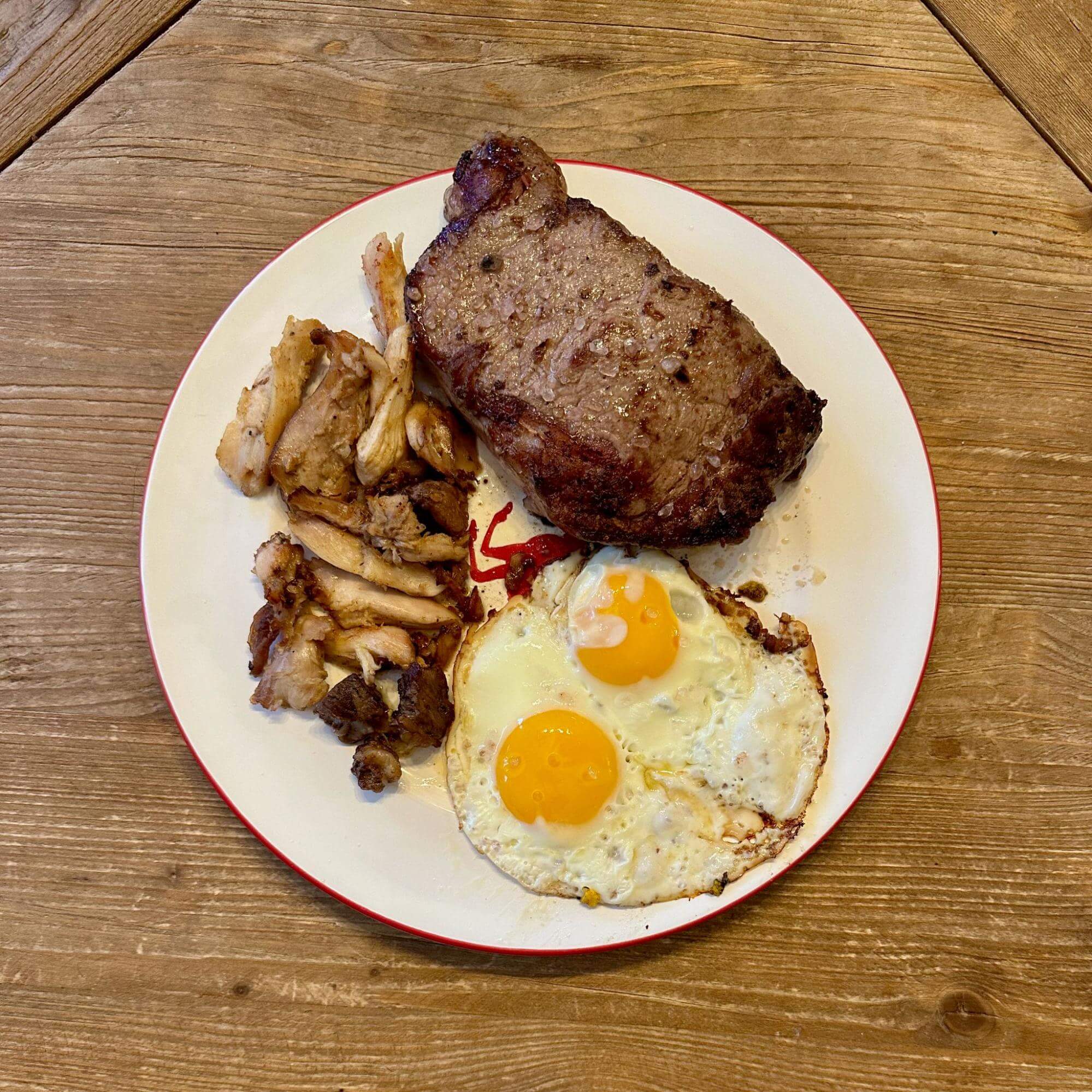
Here are the most important top-line notes on the chicken vs beef debate:
- Beef delivers more total nutrition per calorie than chicken.
- Chicken’s fat profile is disproportionately high in omega-6 fats.
- Beef provides a more balanced amino acid profile that supports connective tissue and metabolic health.
- Ruminant animals (e.g., cows) tend to be healthier and more resilient than industrially raised poultry.
- Even on a budget, beef can form the foundation of an animal-based diet (with the right cuts and strategies).
Taken together, these points explain why beef consistently outperforms other primary food sources, especially when food choices are intentionally limited (as they are on an animal-based diet).
Why Beef Works Better as a Foundation
In a nutshell, beef provides more of the nutrients that humans actually need. That advantage is most evident in micronutrient density, but it extends to fat composition, amino acid balance, and even the health of the animals themselves.
Chicken can absolutely contribute protein. The problem is that conventionally-raised poultry is a relatively poor source of high-quality protein due to genetic and environmental factors (which I explain in more detail in my article about Cornish Cross chickens – the dominant breed of commercial chickens).
Plus, protein alone does not equal nourishment, particularly on an animal-based diet where micronutrient density is front and center.
Overall Nutrient Density and Quality
Beef is not just a source of protein and calories. It delivers a broad range of essential and non-essential micronutrients in forms that the human body absorbs efficiently.
Heme iron is a clear example. Beef contains substantially more of it than chicken, and heme iron is absorbed far more reliably than non-heme iron. Iron plays a central role in oxygen transport, energy production, and cognitive function.
Suboptimal iron status is common, even among people who eat a “healthy” diet, and it often shows up as fatigue, poor recovery, and impaired mental clarity long before it becomes a clinical diagnosis.
Beef is also richer in zinc, vitamin B12, B6, choline, and selenium. Chicken contains some of these nutrients, but generally in lower concentrations and with less consistency across cuts.
To keep the comparison honest, the table below uses lean red meat and skinless chicken breast. Fat content in chicken changes dramatically when skin or fattier cuts are included, and while that increases calories, it also introduces substantially more omega-6 fatty acids.
Even when comparing lean cuts on both sides, beef delivers substantially more iron, zinc, Vitamin B12, and several important bioactive compounds.
Nutrient comparison per 100 g cooked (USDA data):
| Nutrient | Lean Beef (7-10% Fat) | Chicken Breast (Skinless) |
|---|---|---|
| Calories | ~170 kcal | ~165 kcal |
| Protein | ~26 g | ~31 g |
| Total Fat | ~7–8 g | ~3.5–4 g |
| Saturated Fat | ~3.0 g | ~1.0 g |
| Iron (heme) | ~2.6–3.0 mg | ~0.9 mg |
| Zinc | ~4.5–5.0 mg | ~1.0 mg |
| Vitamin B12 | ~2.5–2.7 µg | ~0.3 µg |
| Vitamin B6 | ~0.6 mg | ~0.5 mg |
| Niacin (B3) | ~5.5 mg | ~13.7 mg |
| Choline | ~75–80 mg | ~65 mg |
| Selenium | ~25 µg | ~24 µg |
| Omega-6 (linoleic acid) | ~0.3 g | ~0.7 g |
Chicken often wins on protein density alone, but beef delivers a broader and more meaningful micronutrient package per serving.
Ruminant meats more closely match the nutrient profile that supported early human growth, brain development and physical resilience; chicken, by comparison, is nutritionally narrower.
That said, if you’re a bodybuilder who needs to maximize protein intake while reducing fat intake, chicken can be a temporary solution to facilitate those goals.
Additionally, chicken can be a viable (albeit temporary) option if you’re trying to reduce your calorie intake without negatively affecting your protein intake.
In other words, you can treat chicken as a temporary strategy to reach a specific goal, but that’s really outside the scope of an animal-based dietary framework that’s meant to be sustainable for the rest of your life.
Fatty Acid Profile and Inflammation

As alluded to above, fat quality is another area where beef and chicken diverge.
Most modern chickens are raised on grain-heavy diets, which directly influences the fatty acid composition of their meat. Even when skin is removed, chicken fat tends to be relatively high in omega-6 linoleic acid. When skin or fattier cuts like thighs are included, omega-6 intake increases significantly.
Omega-6 fats are not inherently harmful, but the issue is quantity. Most people already consume far more omega-6 than omega-3, largely from seed oils and processed foods. Chicken adds to that imbalance, which can lead to a dramatic increase in metabolic disease.
Beef – particularly when it comes from grass-fed or grass-finished cattle – has a more balanced fatty acid profile. It contains more omega-3 fats, higher levels of conjugated linoleic acid (CLA), and a lower overall omega-6-to-omega-3 ratio. This aligns more closely with ancestral fat intake patterns and tends to support a lower baseline level of inflammation.
In most cases, even grain-finished beef has a more favorable omega-3 to omega-6 ratio than conventionally raised chicken.
Amino Acid Balance and Structural Health
Protein quality is not just about grams. It’s about amino acid composition.
Chicken muscle meat is particularly high in methionine and low in glycine. Glycine plays an important role in collagen synthesis, connective tissue health, sleep quality and detoxification pathways. Diets that emphasize white muscle meat can negatively impact these systems over time.
Beef naturally provides a more balanced amino acid profile, especially when cuts include connective tissue or are cooked slowly.
Historically, humans consumed animal products in ways that automatically balanced amino acids. Modern eating patterns tend to do the opposite by prioritizing trimmed, lean cuts that look good on a nutrition label but fall short over the long term.
Beef also provides higher levels of creatine and carnitine, two bioactive compounds that rarely appear in nutrition debates but play important physiological roles.
Specifically, creatine supports rapid energy production in muscle and brain tissue (in the form of ATP), while carnitine helps transport fatty acids into mitochondria for energy. Humans can synthesize both, but dietary intake reduces metabolic burden, particularly for physically active people.
That’s also why we add creatine to Beef Protein + Creatine, the protein powder we make at MK Supplements. Most of beef’s natural creatine is lost when meat is turned into protein powder, so we put 3 grams back into every serving. And because the protein is made from meaty bones and connective tissue rather than just muscle meat, it’s also naturally rich in glycine.
Animal Health, Welfare and Disease Pressure

The health of the animal matters, both ethically and nutritionally.
Industrial agriculture systems are optimized for speed and scale.
Chickens (mostly Cornish Cross) are bred to grow rapidly – often, faster than their skeletal and immune systems can comfortably support.
Meanwhile, high stocking densities and indoor confinement create significant disease pressure (which is why antibiotics have historically been common in poultry production).
Grain-finished cattle are fatter than they would be on pasture, and grain-heavy diets have been shown to increase the prevalence of acid-resistant bacteria, including certain harmful strains of E. coli.
But conventionally-raised cattle still tend to be healthier than conventionally-raised poultry, with less need for pharmaceutical interventions.
Pastured chickens are a step in the right direction, but even they rely heavily on supplemental feed including cheap grains, corn and soy, which negatively affect their fatty acid profile.
Grass-fed cattle raised on pasture tend to be the most resilient animals. They eat species-appropriate diets, live outdoors, and generally require less pharmaceutical intervention. Healthier animals produce higher-quality food.
This mirrors how humans historically selected animals to eat.
Where Organ Meats Fit Into the Conversation

Most beef vs. chicken discussions focus almost exclusively on muscle meat, and that’s an important limitation.
From a micronutrient perspective, muscle meat alone is significantly less nutritious than organ meat. Liver, heart, kidney, and other organs provide vitamins and minerals in concentrations that muscle meat simply cannot match.
Adding organs into the mix dramatically improves the nutritional profile of both beef and chicken. That’s why we always save the organs when dispatching chickens on our homestead. Discarding them would mean throwing away the most nutrient-dense parts of the animal.
Even so, beef remains superior from an organ-meat perspective. Beef organs are larger, denser, and generally richer in key nutrients than poultry organs. Ruminant animals concentrate minerals more effectively due to their digestive systems, and that advantage shows up across both muscle meat and organs.
This is also why we offer beef and bison organ supplements at MK Supplements. They’re not meant to replace whole food, but they make nose-to-tail nutrition more accessible when sourcing or preparing fresh organs isn’t practical.
If you’re interested in learning more about this topic, I recommend reading my articles on the benefits of eating various organ meats (which runs down the nutrient profiles of 15 organs) and the benefits of eating beef liver (which takes a deep dive in to the most popular/accessible type of organ meat).
What About Cholesterol?
Cholesterol concerns almost always surface when red meat enters the conversation, and much of that concern comes from a fundamental misunderstanding of what cholesterol is and how it functions in the body.
Let’s be as clear as possible about this point: red meat is not unhealthy (as I explain in detail in this article) — and certainly not because it contains cholesterol.
Cholesterol itself is not a toxin or a waste product. It’s an essential molecule that plays a structural role in every cell membrane, serves as a precursor for steroid hormones (e.g., testosterone), bile acids and Vitamin D, and is especially abundant in the brain. Because cholesterol is so important, the body tightly regulates it through internal production, primarily in the liver.
Where confusion enters the picture is with regard to LDL.
LDL, or low-density lipoprotein, is not cholesterol. It’s a lipoprotein particle, which is a transport vehicle made of protein and fat whose job is to carry cholesterol and other lipids through the bloodstream to tissue that needs them.
Cholesterol cannot travel freely in the blood, so it must be packaged and delivered. LDL is one of the body’s primary delivery systems.
Historically, LDL became associated with cardiovascular disease because higher LDL cholesterol levels were observed in populations with higher rates of heart disease. From that association, a simplified model emerged: dietary cholesterol raises blood cholesterol levels, LDL delivers cholesterol, cholesterol accumulates in arteries, plaques form, and arteries become blocked.
The problem is that this model was incomplete and, in many cases, misleading.
One major assumption was that dietary cholesterol directly raises blood cholesterol, thereby increasing cardiovascular risk. We now know that isn’t how human physiology works. In metabolically healthy people, the liver adjusts cholesterol production in response to intake. When dietary cholesterol increases, endogenous production typically decreases. When intake drops, production increases. This feedback system keeps blood cholesterol levels relatively stable for most people.
One exception to this rule is people who follow a high-fat, low-carb diet. If your body runs on fat and ketones for energy (instead of glucose from carbohydrates), blood cholesterol and LDL levels are often higher because the body relies more on fatty acids for energy production. However, there is no evidence to suggest that those people have a higher risk of developing cardiovascular issues. In fact, maintaining a low-carb, high-fat diet usually leads to dramatically improved inflammatory and insulin markers – two important factors for lowering CVD risk.
Which leads us to another issue with the outdated “lipid hypothesis”: its failure to account for metabolic context. Cardiovascular disease risk is strongly influenced by insulin resistance, chronic inflammation, oxidative stress, smoking, hypertension, and overall metabolic health. LDL levels in isolation tell you very little unless you understand what kind of LDL particles are present and the environment they’re operating in.
As research progressed, the original cholesterol hypothesis began to weaken. Large randomized trials and re-analyses of older data failed to show the expected reduction in cardiovascular events when cholesterol was lowered through dietary means. In some cases, outcomes actually worsened.
One often-cited example is the Sydney Diet Heart Study, a large randomized controlled trial that replaced saturated fat with omega-6-rich polyunsaturated vegetable oils. While this intervention successfully lowered cholesterol levels, it was associated with higher rates of cardiovascular events and all-cause mortality. In other words, lowering cholesterol did not translate into better outcomes and may have increased risk.
Similar findings have emerged from other datasets and cohort analyses, particularly in older populations, where lower total cholesterol and LDL levels have repeatedly been associated with higher all-cause mortality, not lower. These findings don’t suggest that cholesterol is protective in every context, but they do undermine the idea that high cholesterol is inherently dangerous or that lowering it is automatically beneficial.
As this evidence accumulated, federal dietary guidance quietly shifted. Beginning with the 2015–2020 Dietary Guidelines for Americans, the long-standing recommendation to limit dietary cholesterol to a specific number, such as 300 milligrams per day, was removed. The focus shifted toward overall dietary patterns rather than isolated cholesterol caps.
The most recent 2025–2030 Dietary Guidelines continue this approach. Instead of focusing on limiting dietary cholesterol, the new guidelines emphasize food quality, nutrient density, and reducing highly processed foods.
This reflects a more accurate understanding of the underlying biology. Cholesterol is not the primary problem. What matters far more is lipoprotein behavior, particle size, oxidative stress, inflammation, and metabolic health. Small, dense LDL particles in an inflammatory environment behave very differently from larger, buoyant LDL particles in a metabolically healthy individual.
In the context of beef versus chicken, cholesterol is therefore a poor metric for evaluating health risk. Both foods contain cholesterol. Neither meaningfully increases cardiovascular disease risk in metabolically healthy individuals. Focusing on cholesterol distracts from the variables that actually matter, such as nutrient density, fat quality, inflammation, and overall metabolic resilience.
If cardiovascular health is a concern, the solution isn’t to swap steak for chicken breast. It’s to improve metabolic health and choose foods that support the body rather than stress it. If you want to learn more about this topic, check out my article titled Saturated vs. Polyunsaturated Fats: What’s The Real Cause of Heart Disease?
Cost and Budget Considerations

Most people argue that chicken is much cheaper than beef. But here’s one very important thing that’s often overlooked in the price discussion: a well-raised chicken isn’t actually cheaper than beef. In fact, it’s more expensive.
We spend approximately $30 per chicken on organic, corn-free and soy-free feed. That doesn’t take into account the labor or infrastructure required to raise and butcher the birds. If we were to sell chickens for meat, we’d have to charge about $50 per bird.
Would you pay $50 for a chicken?
Of course, we purchase chicken feed by the ton, not by the truckload, as large poultry operations do. That means our cost per pound of feed is higher than that of larger operations. But even with larger feed volumes involved, you can’t raise a pasture-raised chicken on organic, corn and soy-free feed and then sell it for $7.
What you get for $7 is a genetically weak Cornish Cross chicken that was raised indoors and fed a junk food diet of GMO grains.
The resulting meat from such a chicken cannot be compared to even conventionally-raised beef if you consider nutritional value and animal welfare standards. It’s apples to oranges.
So if budget constraints make it difficult to eat mostly red meat, the solution isn’t to abandon the animal-based approach – it’s to prioritize intelligently.
Ground beef, tougher cuts like chuck or brisket, and slow-cooked roasts offer excellent nutritional value per dollar. Including organs in your diet stretches nutrient intake far beyond what muscle meat alone can provide.
Bottom line? You don’t have to focus on steak if cost is a concern.
If conventionally-raised chicken is part of your diet, darker meat and skin-on cuts may be more satisfying, but they also come with a higher omega-6 load. Used strategically, chicken can contribute protein, but ruminant foods are still better suited to cover nutritional gaps.
Summary and Final Verdict

Properly raised chicken isn’t inherently unhealthy. It’s just nutritionally limited when treated as a foundation food. The bigger problem is that it’s difficult to find organic poultry that was fed a corn and soy-free diet. And if you can find it, it’s usually prohibitively expensive.
Beef delivers more micronutrients, a better fat profile, a more balanced amino acid composition, and aligns more closely with the dietary patterns that supported human health throughout our evolution.
Even when organ meats are included on both sides, ruminant animals still provide a deeper and more complete nutritional package.
My family and I have been following an animal-based diet for years, and beef does the heavy lifting. We eat chicken from time to time, but it’s chicken we’re raised ourselves, and we eat it more because it’s a easy change of pace than because it provides any unique or particularly valuable dietary benefits.

Michael Kummer is a healthy living enthusiast and CrossFit athlete whose goal is to help people achieve optimal health by bridging the gap between ancestral living and the demands of modern society.