
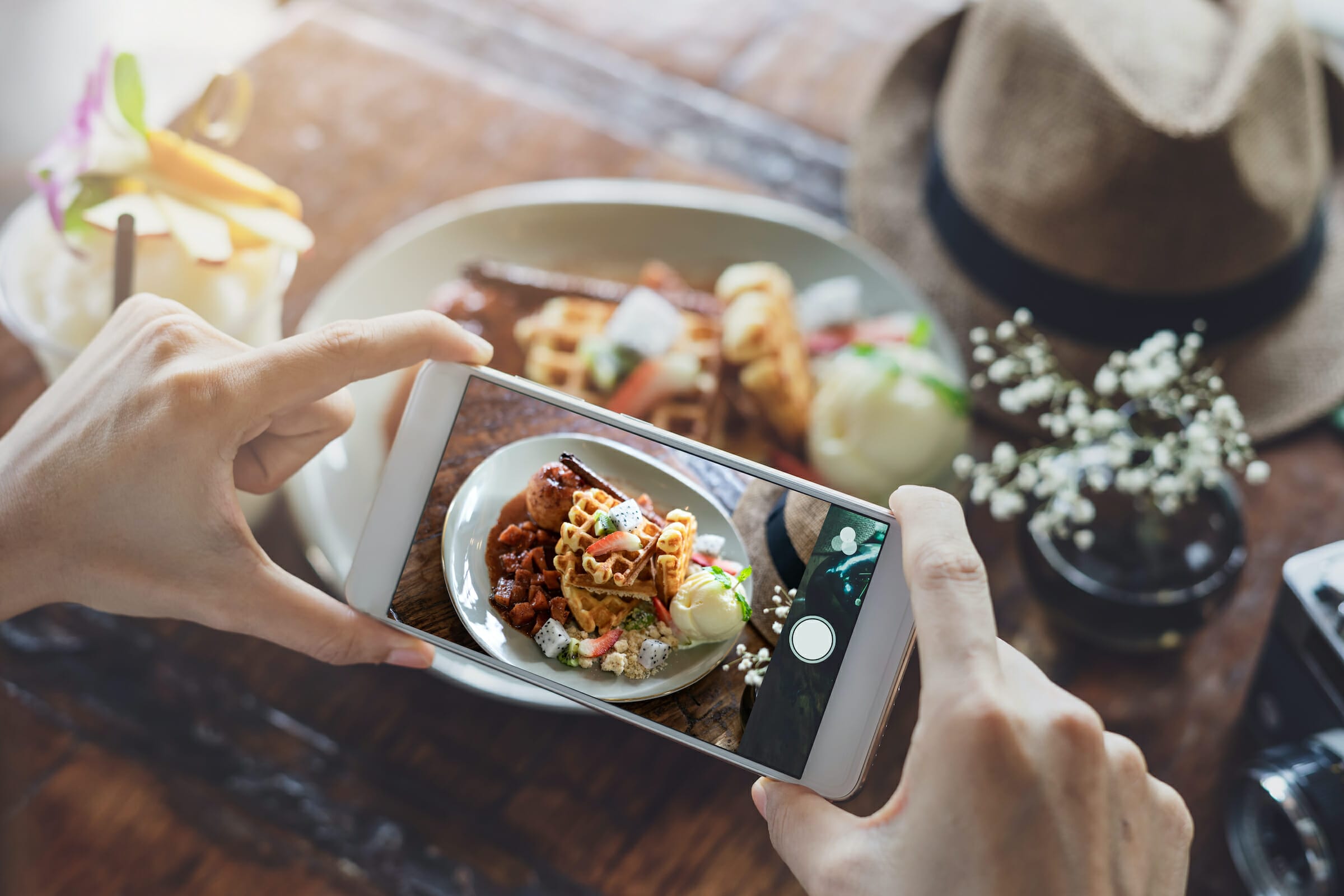
Before I started my own business, I had to travel for work on a regular basis. And sticking to a healthy dietary framework while on the road was a major challenge — especially when I didn’t have time for a proper meal and had to grab something on the go.
In those situations, it was way too easy to make unhealthy food choices just for the sake of satisfying my appetite.
Over the years, I’ve developed a simple system that takes the stress out of eating while traveling. It comes down to a few rules:
None of this is complicated, but it took me a few years of traveling to figure out that the real threat isn’t missing a meal — it’s the seed oils, processed carbs, and mystery ingredients hiding in most restaurant and hotel food.
Once I shifted my focus to avoiding those things instead of trying to find the perfect meal at every stop, eating on the road got a lot easier.
Here’s the full playbook…
1. Control Where You Stay
Most people pick a hotel based on price or location, without thinking about the food situation. That’s a mistake I’ve made more than once — and it’s one of the easiest things to fix.
If I have the choice, I’ll pick an Airbnb over a hotel. Having access to a kitchen (even a basic one) means I can buy quality food from a nearby store and cook my own meals. That gives me complete control over what goes on my plate (and what it’s cooked in).
This is where being near a Sprouts or Whole Foods Market really pays off: you can stock up on good meat, eggs and cooking fats, and eat well for the entire trip without setting foot in a restaurant.
If a hotel makes more sense, my approach is different. I usually eat at a nearby steakhouse or a restaurant that serves simple meat dishes. Occasionally, if that isn’t an option, I’ll use a grocery store to pick up avocados, beef jerky (if I can find any without junk ingredients), or boiled eggs. None of that requires a kitchen, and it’s enough to get me through a day or two without resorting to whatever the hotel has on offer.
I learned the importance of this the hard way when staying at a Courtyard by Marriott for a work conference. The hotel didn’t have an actual restaurant, just a snack bar and a kitchen for prepping the buffet. But they were serving eggs, so I figured I could get them cooked to order.
Unfortunately, at 6:30 a.m. that day, their egg delivery hadn’t arrived yet. The only alternative they could offer was the liquid egg mix they were (apparently) serving to the rest of their guests.
I couldn’t tell you what was in that liquid, and I wasn’t about to find out.
The bottom line? It pays to do some research before you leave home.
For example, don’t hesitate to call the hotel and ask if they’re willing and able to cook your breakfast to order.
2. Keep It Simple When You Eat Out
When I eat at a restaurant while traveling, I follow one rule: order foods that can’t be messed up easily.
I usually choose steak houses when I’m on the road, and I stick to ordering things like steak, grilled fish and smoked brisket. These animal-based foods are straightforward: the fat primarily comes from the animal itself, the preparation is simple, and there’s not much a kitchen can do to ruin them.
The reason I keep it so simple is that most restaurants cook with industrial seed oils — canola, soybean, corn oil — that are loaded with inflammatory omega-6 fatty acids.
These oils are in virtually everything at a typical restaurant: fryer oil, salad dressings, sauces, marinades. You can’t always avoid them completely, but ordering simple grilled proteins keeps your exposure to a minimum.
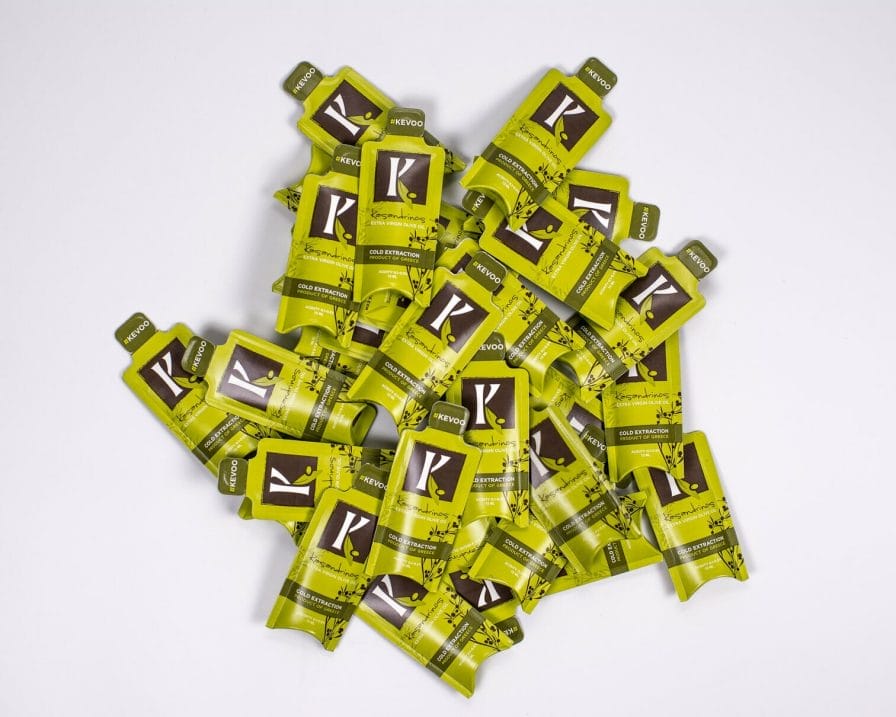
When the restaurant doesn’t have good olive oil — which is most of the time — I pull out one of my Kasandrinos EVOO travel pouches. I carry them everywhere, and I’ll tell you more about them in the next section.
I’ve also been using an app called Seed Oil Scout to find restaurants that don’t cook with seed oils. It’s available on iOS and Android, covers over 45,000 restaurants, and takes a lot of the guesswork out of picking a place in an unfamiliar city.
Breakfast is usually the easiest meal for me on the road, because I’m entirely satisfied with eggs and a banana or two — and you can get eggs almost anywhere. Even in the crappiest places I’ve been, they had eggs.
I make sure to order actual eggs and always avoid the liquid egg substitute I mentioned earlier. I ask the cook to use olive oil in the pan instead of whatever vegetable oil they’d normally use, and tell them not to add milk, cheese, or anything else.
3. Pack the Right Stuff
I never leave home without a few non-perishable staples in my bag. This is the core of my travel strategy — rather than hoping I’ll find good food at my destination, I pack what I need and take the stress out of it entirely.
Carnivore Bars
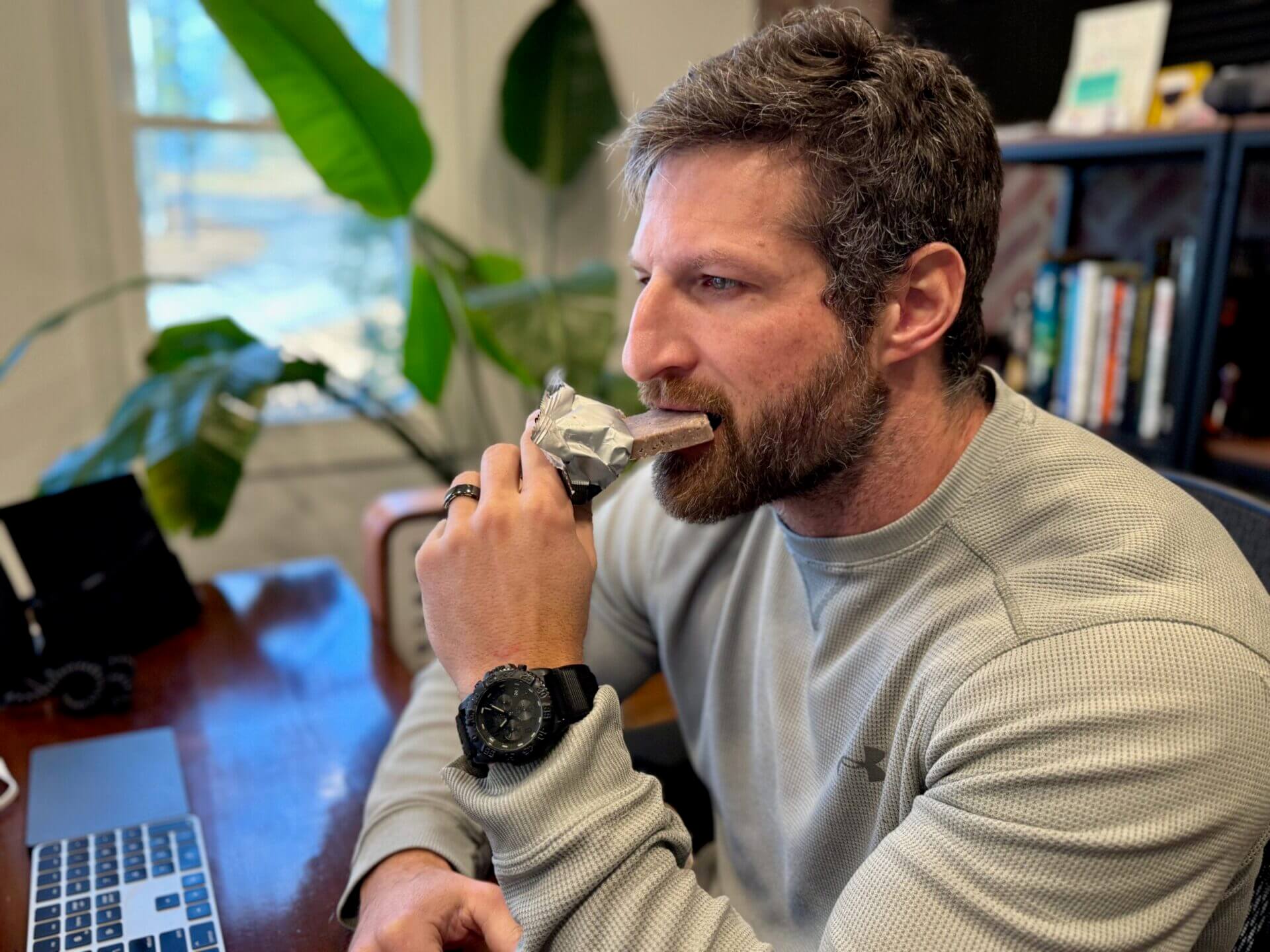
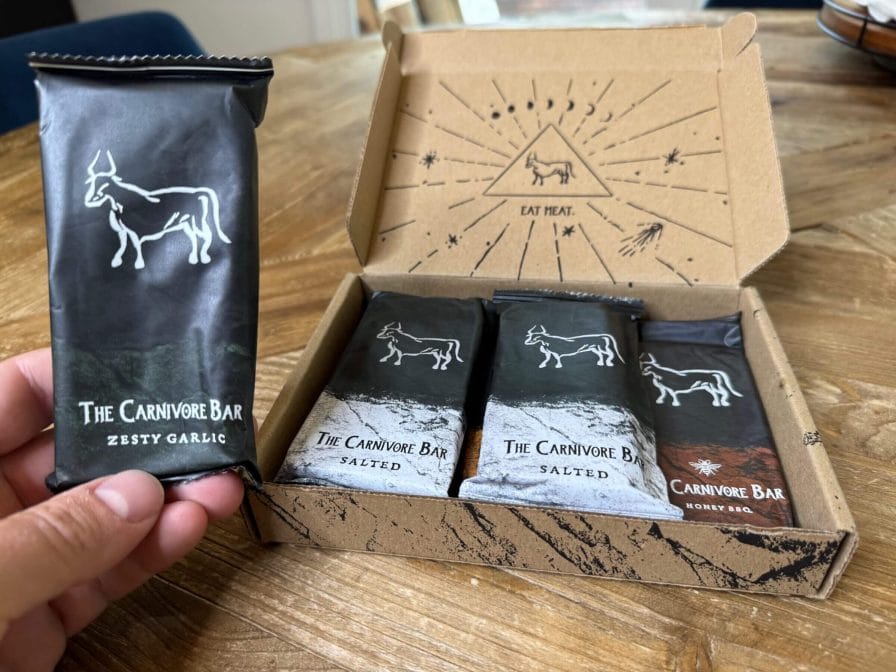
Carnivore Bars are my go-to travel snack. They’re essentially modern pemmican, which contains just three ingredients: grass-finished beef, grass-finished tallow, and Redmond Real Salt.
Each bar packs roughly 400 calories with about 20 grams of protein. No seed oils, no sugar, nothing artificial, and it’s completely shelf-stable.
When I’m traveling to health conferences or visiting my family in Austria, I always carry a few in my backpack.
My team here at MK Media did a full review if you want the details.
They run about $6-8 per bar, which isn’t cheap — but when the alternative is airport food cooked in canola oil, they’re worth every penny.
Beef Liver Capsules
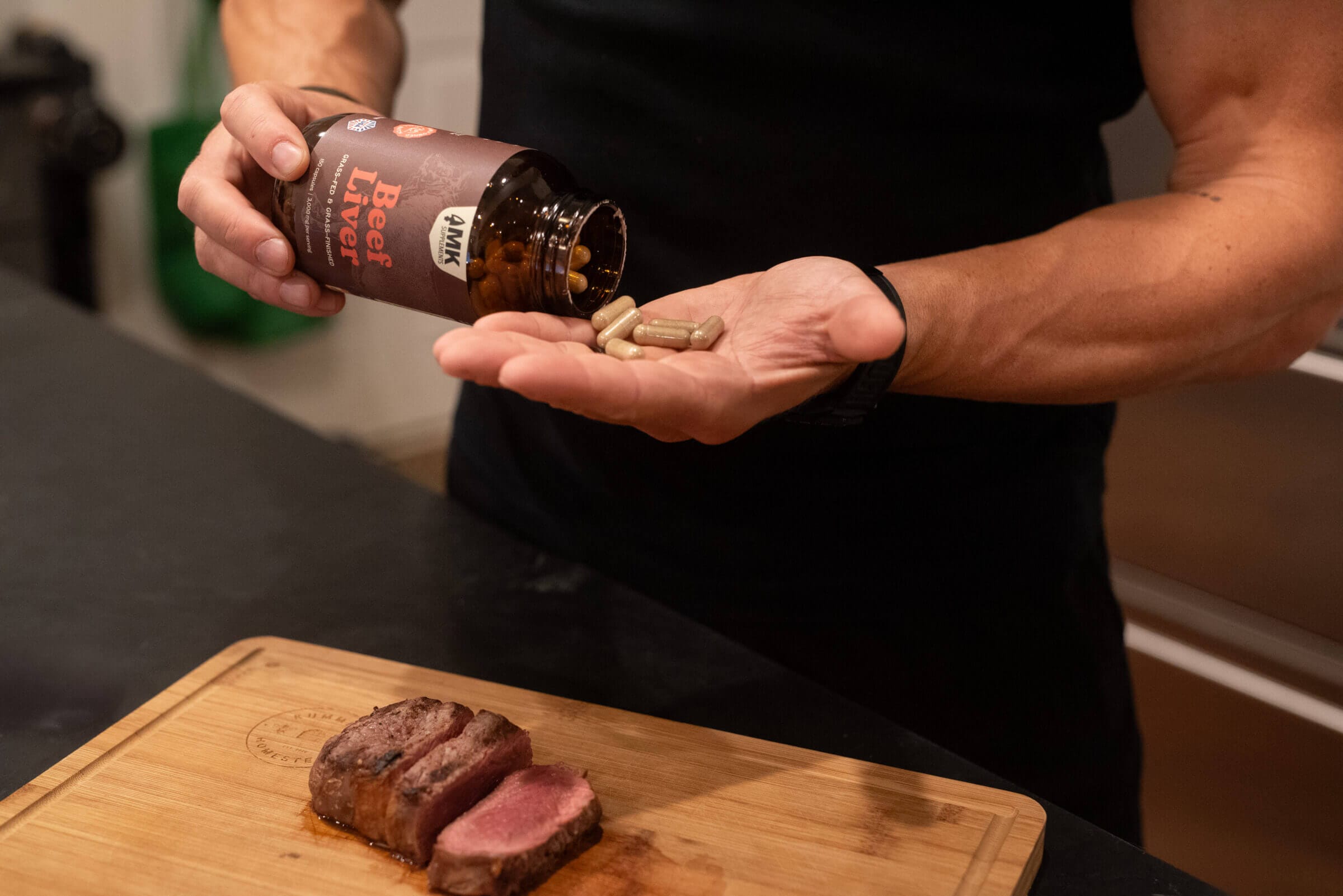
I take freeze-dried organ meat supplements daily, and they’re one of the easiest things to travel with — just toss the bottle in your bag.
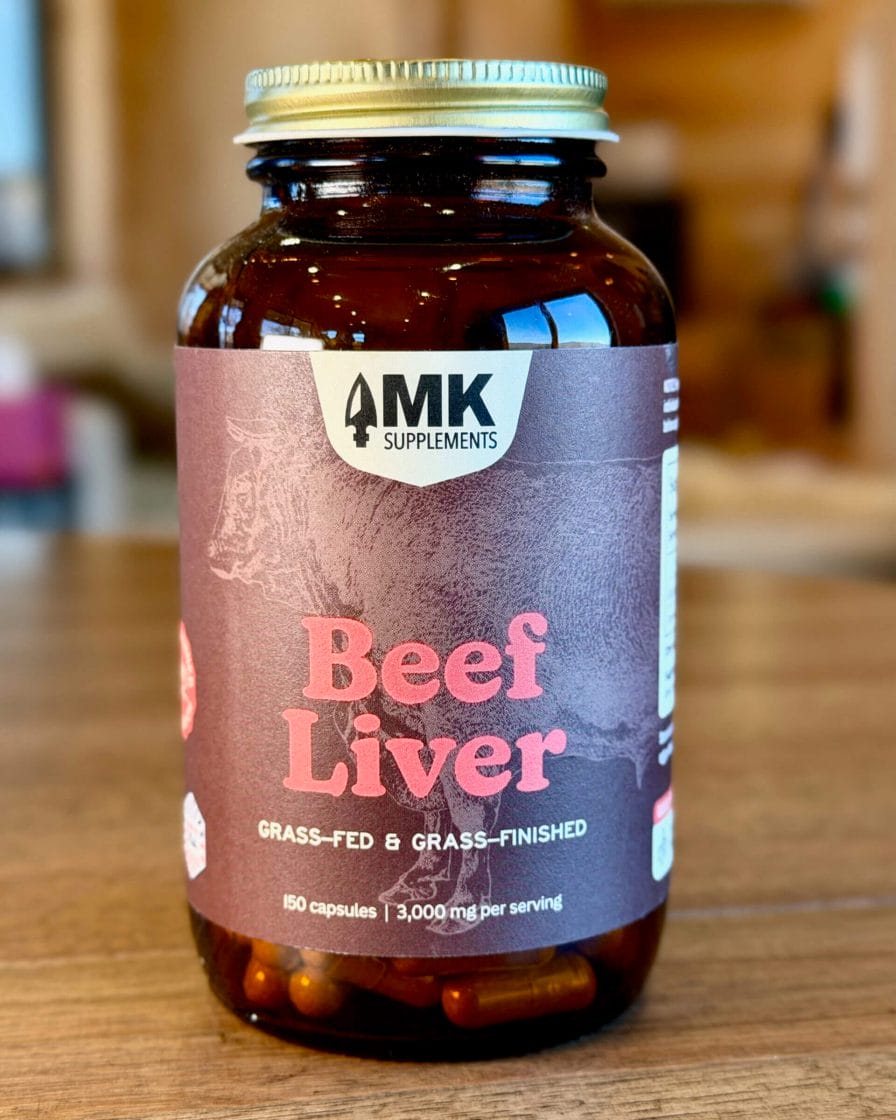
Five capsules of MK Supps Beef Liver delivers a concentrated dose of Vitamin A, Vitamin B12, iron, and over 20 other essential nutrients.
It’s not a meal replacement (see below for that), but it means I’m still getting the nutrients that matter even when my food options aren’t ideal for a few days.
Our whole family takes these, including our kids. (That’s how strongly I feel about making organ meat a daily dietary staple.)
HLTH Code
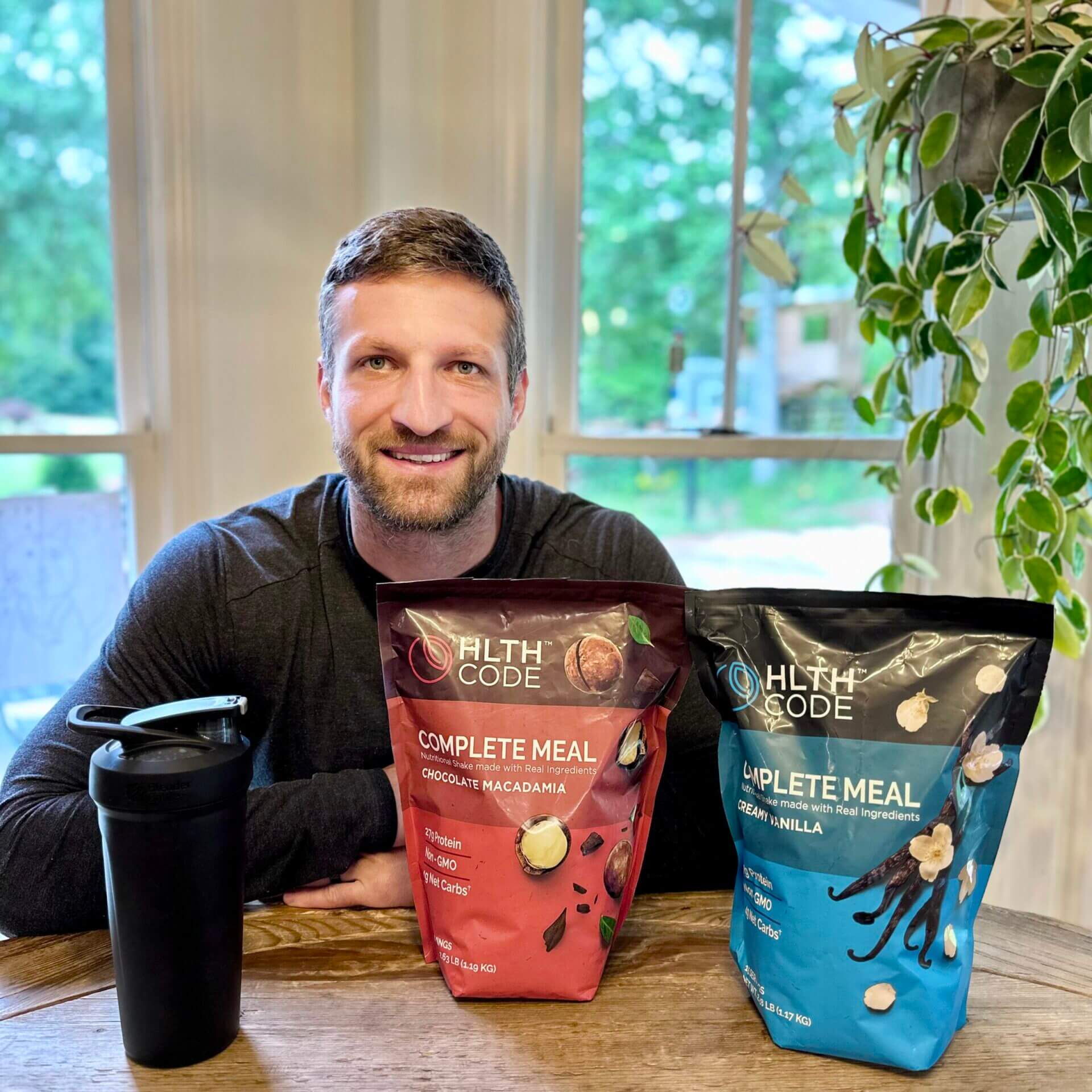
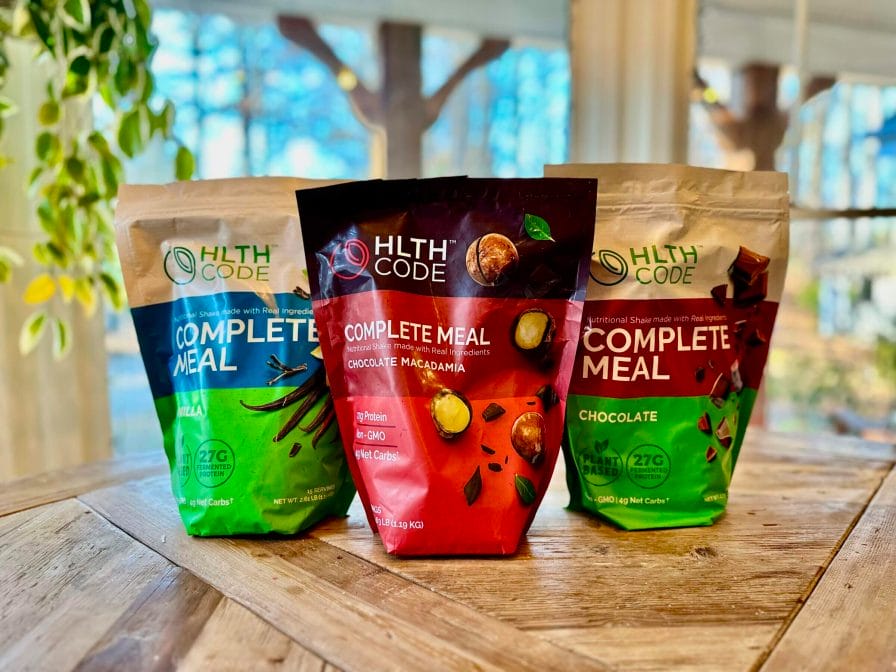
Unlike a basic protein shake, HLTH Code is formulated to replace an entire meal — with 400 calories, 27 grams of protein, healthy fats, and just 4 grams of net carbs.
I always pack some in my suitcase for when healthy meals aren’t an option. I pre-portion it into bottles before a trip and just add water when I’m ready to drink it.
On countless flights, I’ve asked the flight attendant to pour water into my bottle so I could shake it up mid-air. They’re always curious about what I’m mixing, so I explain what it is and tell them where they can buy it.
Kasandrinos EVOO Pouches
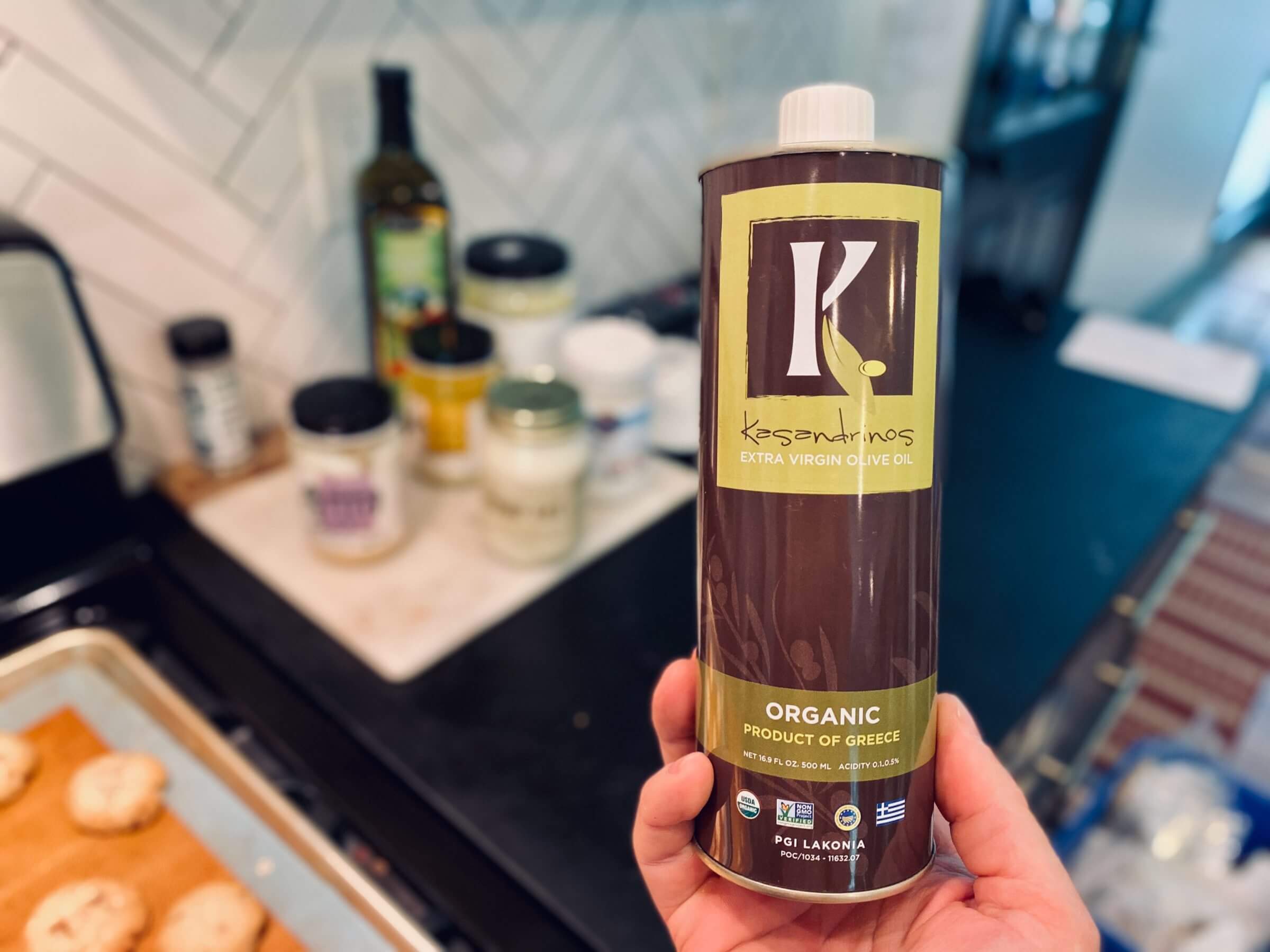
I’ve been carrying Kasandrinos‘ 12ml single-serving extra-virgin olive oil pouches in my backpack whenever I leave home since I met Tony Kasandrinos at Paleo f(x) back in 2019.
I squeeze them directly into my mouth as a snack when I’m in a pinch — I know olive oil has a distinctive taste that not everybody appreciates, but I love it, and Kasandrinos tastes delicious.
They’re also packed with healthy calories that keep me satisfied.
I use the pouches instead of bottles because I don’t want to spill my oil and make a mess aboard an airplane — and because I don’t want to waste that liquid gold. I also pull them out at restaurants when the olive oil on the table isn’t up to standard.
4. Adjust for International Travel
| Strategy | Domestic | International |
|---|---|---|
| Finding restaurants | Easy Seed Oil Scout covers 45,000+ U.S. restaurants. | Harder Seed Oil Scout coverage is mostly U.S.-based. Research ahead of time. |
| Ordering substitutions | Normal U.S. waiters are accustomed to dietary requests. | Varies Can be seen as rude in some cultures. Know the local norms before you sit down. |
| Packed food | Works Carnivore Bars, HLTH Code, liver capsules, EVOO pouches all travel fine. | Works Same items, but pack extra. Finding replacements abroad is much harder. |
| Grocery stores | Easy Sprouts, Whole Foods, and similar stores are widely available. | Harder Familiar brands and products may not exist. Local markets can be great if you know what to look for. |
| Fasting | Works Same principles apply everywhere. | Works Especially useful on long transatlantic flights. |
| Family meals | Easy You control the menu at home. | Tricky Your mom’s Marillenknödel aren’t negotiable. Decide your exceptions before you leave. |
My wife Kathy and I travel internationally at least a couple of times a year — usually to visit her family in Costa Rica or mine in Austria.
The core principles outlined above still apply, but a few things get harder.
For example, Seed Oil Scout’s coverage is mostly U.S.-based. Finding specific brands or products you rely on at home might not be possible. And in some cultures, asking the waiter to swap your side dish or hold the sauce can come across as rude — which is worth knowing before you sit down.
I can tell you from experience that waiters in Austria may look at you funny when you ask to substitute potatoes for something else with your Schnitzel (which I’ll indulge in every once in a blue moon).
Here’s how I handle it…
Look into what the local cuisine offers naturally
A lot of traditional food cultures are still better than the Standard American Diet, even without trying. But don’t assume that just because a country has a traditional food culture, the food is automatically healthy. When we visit Costa Rica, I’ve seen firsthand that processed food and chronic disease have crept into even that culture over the last few decades. The trick is separating the traditional food from the modern junk.
Decide on your exceptions before you leave
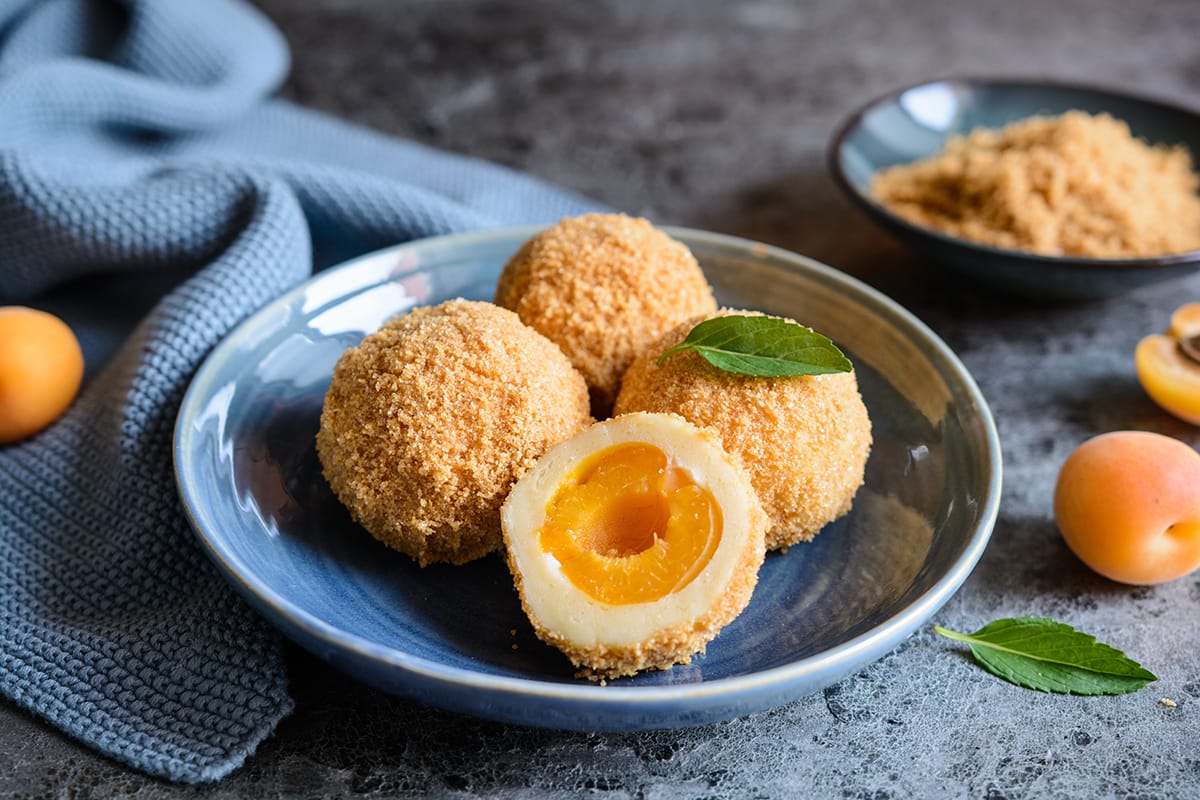
When I visit my mom in Austria, I know her Marillenknödel are going to be on the table. Delicious? Absolutely. Compatible with how I normally eat? Not even close. Sorry, Mom. But I decide ahead of time what exceptions I’m willing to make so I’m not standing in her kitchen trying to negotiate with myself in the moment. That takes the stress out of it. Figure out where your lines are before you get on the plane, and you won’t end up making choices you regret.
Pack more than you think you’ll need
I always carry Carnivore Bars when visiting family in Austria because I know I can’t reliably find food that meets my standards there. On a long transatlantic flight, a couple of bars and a shaker bottle of HLTH Code can cover me for the entire travel day without touching whatever the airline is serving.
5. Don‘t Be Afraid to Skip a Meal
Most of us grew up believing that three meals a day is how the human body works — that skipping a meal means low energy or some kind of metabolic disaster.
I used to think that way too. But it turns out that idea has a lot more to do with food industry marketing than it does with actual human biology.
From an evolutionary perspective, humans didn’t eat on a set schedule. We ate when a hunt was successful and went without food when it wasn’t (sometimes for a day or more). Our bodies are genuinely built for this.
That said, I’ll be upfront: if you’ve never fasted before, the first few times might not feel great. When you stop eating, your body taps into liver and muscle glycogen before switching to fat for fuel.
If your metabolic health doesn’t support proper glucose management — for example, because you consume a diet high in processed carbs and seed oils that has made your body dependent on a steady stream of glucose — that glycogen phase can feel pretty lousy. The switch to fat metabolism (along with benefits like autophagy and improved insulin sensitivity) usually takes 20 to 24 hours.
When I first started intermittent fasting, I found it very difficult for exactly this reason. It wasn’t until I changed the way I ate that fasting became easy. These days, my wife Kathy and I fast most days without ever feeling hungry, and I usually feel super sharp and mentally clear — not depleted.
But here’s the thing: you don’t need to be metabolically flexible to benefit from this while traveling. There’s a big difference between a 24-hour fast and simply skipping a bad airport breakfast to eat a better lunch a few hours later.
I actually do longer fasts when I travel for work; by not eating, I have one less problem to deal with. But even if you’re not there yet, the tip is simple: if the only food available is junk, you’re better off waiting for something higher quality. Hunger comes in waves, and those waves pass.
If hunger is something you struggle with, I put together some practical tips for managing it during fasting periods.
6. If You Travel Rarely, Don’t Overthink It
If you only hit the road once in a blue moon, don’t stress about making every single meal perfect.
Obviously avoid the airport food court and anything that’s clearly deep-fried in seed oil. But one less-than-ideal meal isn’t going to undo months of solid eating.
The real problem is when frequent travelers default to convenience food every trip. That’s a pattern — and patterns are what actually move the needle on your health, for better or worse.
If that describes you, the tips above will change how you eat on the road.
Frequently Asked Questions
My first choice is to not eat at the airport at all. Most airport food is cooked in seed oils, loaded with processed carbs, or both. If I’m flying in the morning, I’ll usually just fast until I land and find something better (I actually find that extended fasts are easier when I’m traveling because I have one less thing to think about).
But if it’s a long travel day and I genuinely need to eat, I look for a sit-down restaurant — not a grab-and-go counter — that serves grilled meat or wild-caught fish.
I skip the sauces and keep the order as simple as possible.
That said, the whole point of packing your own food is so you’re never forced to settle. If you’ve got Carnivore Bars and HLTH Code in your bag, you always have a fallback.
Yes, and I’ve never had a single issue. Carnivore Bars, beef liver capsules, and HLTH Code powder are all shelf-stable solids. I’ve flown with them on domestic and international flights for years. TSA cares about liquids, not food. As long as you’re not trying to bring a jar of bone broth through security, you’re fine.
Eat what’s available and don’t beat yourself up about it. If the best you can find is a conventionally raised steak from a chain restaurant, that’s still real meat with real protein and bioavailable nutrients. It’s a much better choice than a plate of pasta or a sandwich made with highly-processed cold cuts.
When you’re traveling, the goal isn’t perfection — it’s avoiding the stuff that does the most damage, like seed oils and processed carbs. Buy the best you can find and move on.
Flying is dehydrating, and if you’re fasting on top of it, you need to be intentional about drinking water. I make sure to stay on top of it throughout travel days. That said, more water isn’t always better — overhydration can flush out electrolytes and actually make you feel worse, not better. I go by urine color: light yellow means you’re in a good range. If you’re taking long flights, bring a refillable bottle and ask the flight attendants to fill it up. Most are happy to.
Final Thoughts
Staying healthy on the road used to stress me out. These days, it doesn’t. And that’s not because I’ve gotten more disciplined – it’s because I’ve simplified my approach.
I don’t try to find the perfect meal at every stop. I fast when the options are bad, I pack what I need from home, I stick to restaurants where it’s hard to go wrong, and I give myself permission to not be perfect when I’m visiting family overseas.
The tools that make the biggest difference for me are Carnivore Bars, HLTH Code, MK Supplements Beef Liver capsules, and a handful of Kasandrinos olive oil pouches.
Between those products and a willingness to skip a meal when nothing good is available, I haven’t made a food choice I regret while traveling in a long time.

Michael Kummer is a healthy living enthusiast and CrossFit athlete whose goal is to help people achieve optimal health by bridging the gap between ancestral living and the demands of modern society.

Thank you for giving useful tips. I should need this types of tips.